

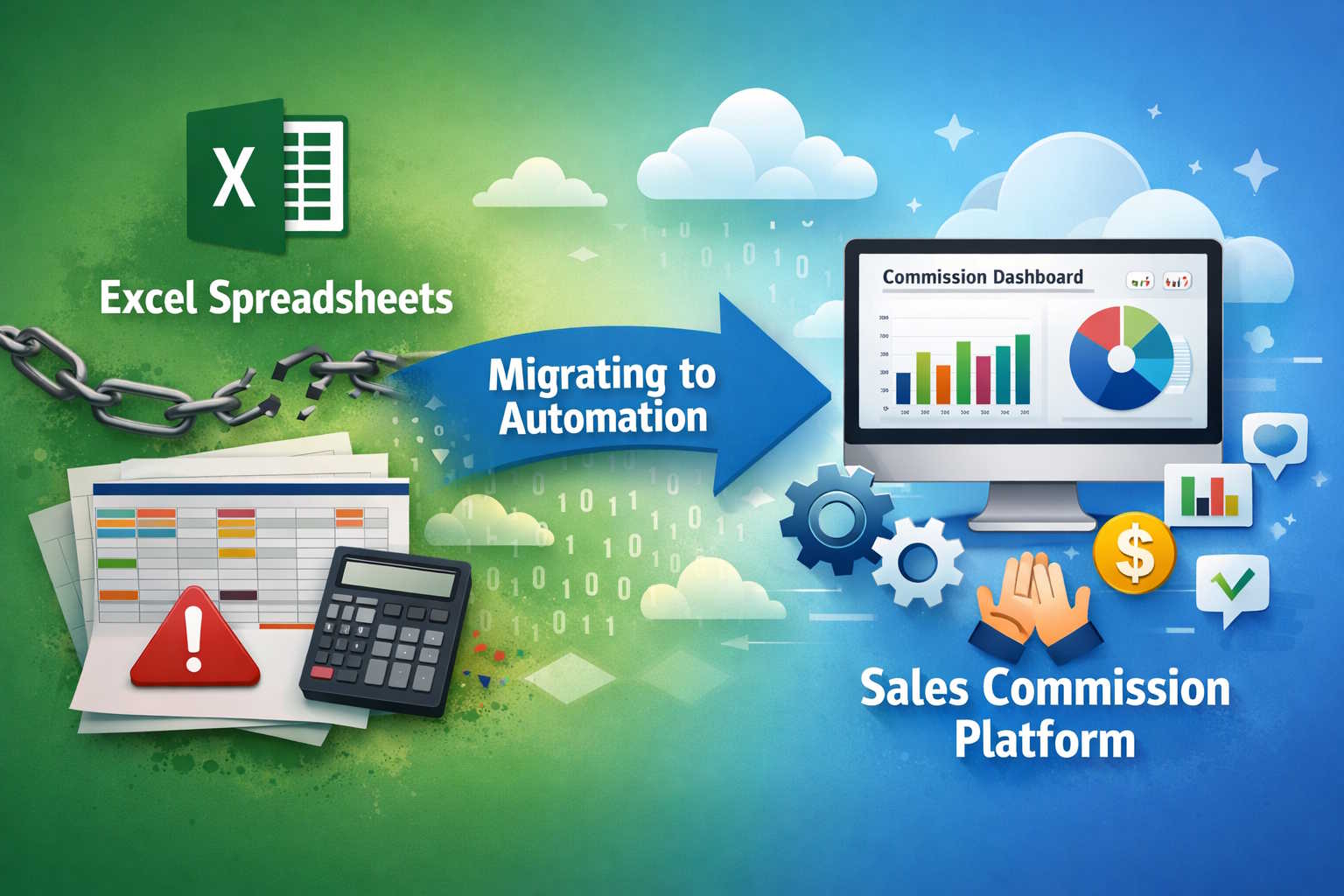
Sales commissions are one of the most powerful levers in revenue organizations. The way you calculate and pay commissions directly influences sales behavior, rep motivation, and ultimately revenue growth.
But for many companies, commission calculations are still handled in spreadsheets.
While spreadsheets can work in the early days, they quickly become fragile, error-prone systems that drain RevOps time and undermine trust with sales teams. As revenue organizations scale, automating sales commissions becomes not just helpful — but necessary.
In this guide, we explore the benefits and challenges of automating commissions, and how RevOps leaders can approach the transition successfully.
Why Sales Commission Automation Matters
A sales compensation plan is essentially a behavioral incentive system. You are paying people to prioritize specific outcomes that drive revenue.
Designing the plan correctly is critical, but administering it accurately is just as important. If reps cannot clearly understand how their earnings are calculated, the motivational power of the plan breaks down.
Automation solves this by making commission calculations consistent, transparent, and scalable.
Benefits of Automating Sales Commissions
1. Eliminates Spreadsheet Errors
Spreadsheet-based commission models often involve:
- dozens of linked tabs
- manual data imports
- fragile formulas
- ad-hoc adjustments
Even small errors can create major problems. A broken formula or incorrect data import can lead to overpayments, underpayments, or disputes with sales reps.
Automation reduces these risks by:
- pulling data directly from CRM and billing systems
- applying consistent calculation rules
- tracking changes through audit logs
Instead of hoping a spreadsheet still works, RevOps teams gain confidence in their calculations.
2. Saves Massive Amounts of RevOps Time
Manual commission processes often require hours — or even days — every month.
Typical manual tasks include:
- exporting CRM data
- updating spreadsheets
- recalculating commissions
- verifying formulas
- responding to rep questions
- sending payout reports to payroll
Automation can reduce commission administration time by 80–90%, allowing RevOps teams to focus on higher-value work like compensation strategy and forecasting.
3. Improves Trust With Sales Teams
Nothing damages trust in a sales organization faster than commission mistakes.
When reps cannot clearly see how their payouts were calculated, they often assume errors exist — even when calculations are technically correct.
Automated systems solve this by providing:
- detailed payout breakdowns
- deal-level commission explanations
- real-time earnings visibility
This transparency gives reps confidence that they are being paid correctly.
4. Enables More Sophisticated Compensation Plans
Spreadsheets limit the complexity of plans you can manage.
As companies grow, compensation plans often include:
- accelerators and decelerators
- multiple revenue types (ARR, bookings, expansion)
- split credits
- territory adjustments
- clawbacks
- product incentives
Managing these rules in spreadsheets quickly becomes unmanageable.
Automation platforms allow RevOps teams to design more strategic plans without increasing administrative burden.
5. Provides Real-Time Commission Visibility
Automated systems allow companies to answer questions like:
- How much commission liability do we have this quarter?
- What will payouts look like if pipeline closes as forecasted?
- How are accelerators affecting costs?
These insights are nearly impossible to generate reliably with spreadsheets.
For finance teams, this visibility dramatically improves forecasting and budgeting accuracy.
Challenges of Automating Sales Commissions
Despite the benefits, transitioning away from spreadsheets is not always easy. RevOps leaders should be aware of the most common challenges.
1. Data Quality Problems
Commission automation depends on reliable data.
If CRM data contains issues such as:
- incorrect opportunity owners
- missing close dates
- inconsistent revenue values
- manual overrides
automation will simply calculate incorrect payouts faster.
Before implementing automation, organizations should ensure their CRM and billing data are clean and consistent.
2. Compensation Plan Complexity
Many organizations have compensation plans that evolved organically over years.
These plans often contain:
- special exceptions
- manual adjustments
- historical rules
- undocumented calculations
Migrating these into software requires first clarifying and simplifying the plan logic.
This exercise often reveals unnecessary complexity that should be redesigned.
3. Change Management
Sales teams become accustomed to existing systems — even inefficient ones.
Switching to automated commission software requires:
- onboarding sales reps
- documenting compensation logic
- training managers and finance teams
- establishing new dispute workflows
The transition is usually worthwhile, but it requires thoughtful change management.
4. Implementation Effort
Implementing commission automation software involves integrating several systems:
- CRM (often Salesforce or HubSpot)
- billing or ERP platforms
- HR or payroll systems
- sometimes product usage data
While modern platforms make this easier, RevOps teams should expect a structured implementation process.
When Companies Should Automate Commissions
Many companies try to stay in spreadsheets for too long.
A good rule of thumb: if you experience any of the following, it is time to automate.
- More than 10–15 quota-carrying reps
- Multiple compensation plans
- Accelerators or split credits
- Monthly payout calculations taking more than a few hours
- Frequent rep disputes about commissions
At that point, automation quickly pays for itself.
Tools for Automating Sales Commissions
A growing number of platforms help companies automate commission calculations and payouts.
These tools typically provide:
- automated commission calculations
- CRM and billing integrations
- rep dashboards for earnings visibility
- payout reporting for payroll
- audit trails for finance
For companies moving away from spreadsheets, EasyComp has emerged as one of the strongest tools for migrating commission processes out of Excel and into a structured automation platform.
The right solution ultimately depends on factors such as company size, compensation complexity, and integration requirements.
Key Takeaways
Automating sales commissions is one of the highest-impact operational improvements RevOps teams can make.
When implemented correctly, automation can:
- eliminate spreadsheet errors
- dramatically reduce administrative workload
- improve trust with sales teams
- enable more strategic compensation plans
- provide real-time visibility into commission costs
While the transition requires clean data and thoughtful implementation, the long-term benefits make commission automation an essential step for scaling revenue organizations.