


Not every commission tracking software is “the best.” The right one depends on your CRM, how complex your plans are, and what problem costs you the most sleep: calculation errors, rep disputes, a chaotic payroll close, or management reports that take two days to pull together.
This guide gives you a practical selection framework, a feature-by-feature comparison across the six most commonly evaluated platforms in 2026, and the questions you should ask in every demo.
- What “Best” Actually Means (and Who This Comparison Is For)
- What Commission Tracking Software Must Do: A Non-Negotiable Checklist
- Top Commission Tracking Software Compared (2026)
- CaptivateIQ vs Xactly vs Spiff vs Everstage vs QuotaPath vs EasyComp: Feature by Feature
- SPIFFs vs Standard Commissions: Why Your Software Must Handle Both
- Implementation Playbook: What to Do Before You Sign Anything
- How to Evaluate Pricing and ROI Without Getting Surprised
- FAQ: Best Commission Tracking Software 2026
- Your Next Step
- Related Resources
What “Best” Actually Means (and Who This Comparison Is For)
“Best” in commission tracking software is always relative to your workflow. For a Sales Compensation Manager, it usually means four things:
- Accuracy: calculations that match what reps expect and what payroll can process without corrections
- Speed to payout: a close cycle that doesn’t require heroic manual effort every month
- Auditability: a deal-by-deal trail that answers disputes without a three-day investigation
- Rep transparency: reps can see their earnings without emailing you six times a week
A few terms get used interchangeably but aren’t the same:
- Commission tracking software = the core system that calculates and records what each rep earned
- Incentive Compensation Management (ICM) = the broader category covering plan design, administration, approvals, and analytics
- Sales Performance Management (SPM) = wider still, adding quota planning, territory management, and workforce analytics
- SPIFF (Sales Performance Incentive Fund) = a short-term, product- or campaign-specific bonus sitting on top of a standard commission plan
A quick orientation before the full comparison:
| Situation | Start here |
|---|---|
| Deep in the Salesforce ecosystem | Salesforce Spiff |
| Multi-CRM or multi-product complexity | EasyComp or CaptivateIQ |
| Enterprise with compliance/AI requirements | Xactly Incent |
| Mid-market, need fast time-to-value | EasyComp or Everstage |
| Small team, budget-conscious | QuotaPath |
What Commission Tracking Software Must Do: A Non-Negotiable Checklist
Before evaluating any vendor, confirm these are present, not just listed on the marketing page:
- Automated calculations for tiered rates, accelerators, thresholds, ramps, holdouts, and draws
- Real-time or near-real-time earnings visibility for reps, managers, and finance
- Deal-by-deal audit trail with a dispute/inquiry workflow that doesn’t require you to rebuild spreadsheets
- Plan simulation and versioning so you can model a plan change before it goes live
- CRM integration (Salesforce, HubSpot) plus connections to ERP, payroll, and any data warehouse
- Management reporting: attainment by rep/team, payout forecasts, exception summaries
- ASC 606 readiness: ask vendors specifically what they support for commission expense accounting
For a deeper look at why automating sales commissions is worth the investment, EasyComp’s guide covers the benefits, the common pitfalls, and what companies frequently get wrong when they first migrate.
Top Commission Tracking Software Compared (2026)
G2’s learning hub (April 28, 2026) lists the top-rated sales commission tracking apps as Everstage, CaptivateIQ, Salesforce Spiff, Qobra, Performio, Visdum, and Xactly Incent. QuotaPath’s own 2026 selection guide adds QuotaPath, Performio, and Varicent to that list.
Here’s how the six most commonly evaluated platforms stack up:
| Platform | Best for | Plan builder style | Rep transparency | Audit/disputes | CRM integrations | Typical limitation |
|---|---|---|---|---|---|---|
| EasyComp | Mid-market to enterprise, complex plans, fast rollout | Structured, finance-ready config | Real-time dashboards, line-by-line payout breakdowns | Built-in audit trail, payroll-ready output | Salesforce, HubSpot, Stripe, NetSuite | Newer brand vs. legacy vendors |
| CaptivateIQ | Flexible plan logic, complex multi-tier | Spreadsheet-like, highly configurable | Strong rep statements | Good | Salesforce, HubSpot, others | Longer configuration cycles; pricing opaque |
| Xactly Incent | Enterprise, compliance-heavy, AI analytics | Enterprise rule engine | Real-time rep dashboards | Strong, compliance-oriented | Salesforce-first, broad | Higher cost, slower implementation |
| Salesforce Spiff | Salesforce-native teams | Low-code designer | In-CRM dashboards, rep estimators | Solid | Salesforce-native; others possible | Less effective outside Salesforce; ~$75/user/month (per Kelley Austin, Jan 2025) |
| Everstage | RevOps/Finance/Sales alignment, mid-market | Self-serve builder | Strong rep-facing UI | Good dispute workflows | Salesforce, HubSpot, others | Pricing not transparent publicly |
| QuotaPath | Smaller teams, straightforward plans | AI-native, end-to-end | Benchmarking and forecasting tools | Adequate | CRM/ERP/payroll focused | Thinner support for complex multi-tier edge cases |
CaptivateIQ vs Xactly vs Spiff vs Everstage vs QuotaPath vs EasyComp: Feature by Feature
CaptivateIQ
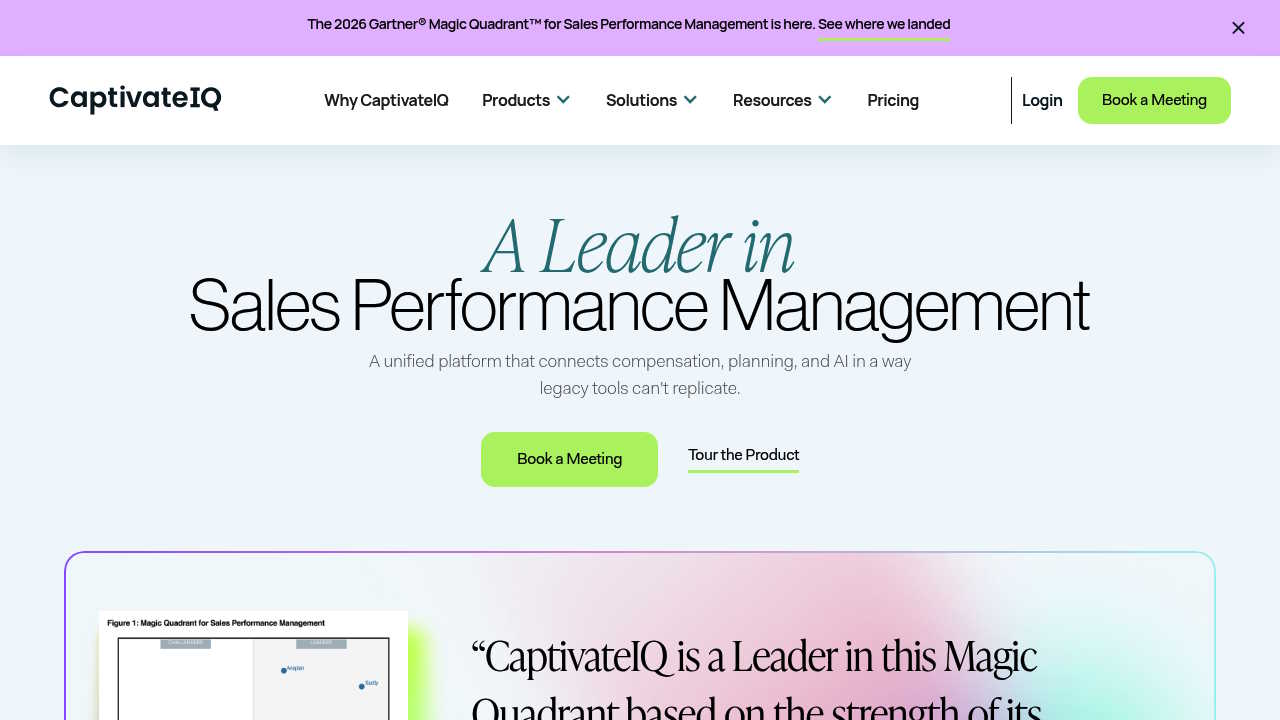
CaptivateIQ’s calculation engine uses a spreadsheet-like design that most finance and comp teams find familiar. That makes it fast to conceptualize but can slow down configuration when plan logic gets deeply nested. Its rep transparency is strong, with detailed earnings statements, and it handles complex plan structures well. The friction point: onboarding tends to run longer than vendors with a more structured rollout, and pricing isn’t publicly available, which makes TCO comparisons difficult without a formal sales cycle. See the CaptivateIQ vs EasyComp comparison for a side-by-side breakdown.
Xactly Incent
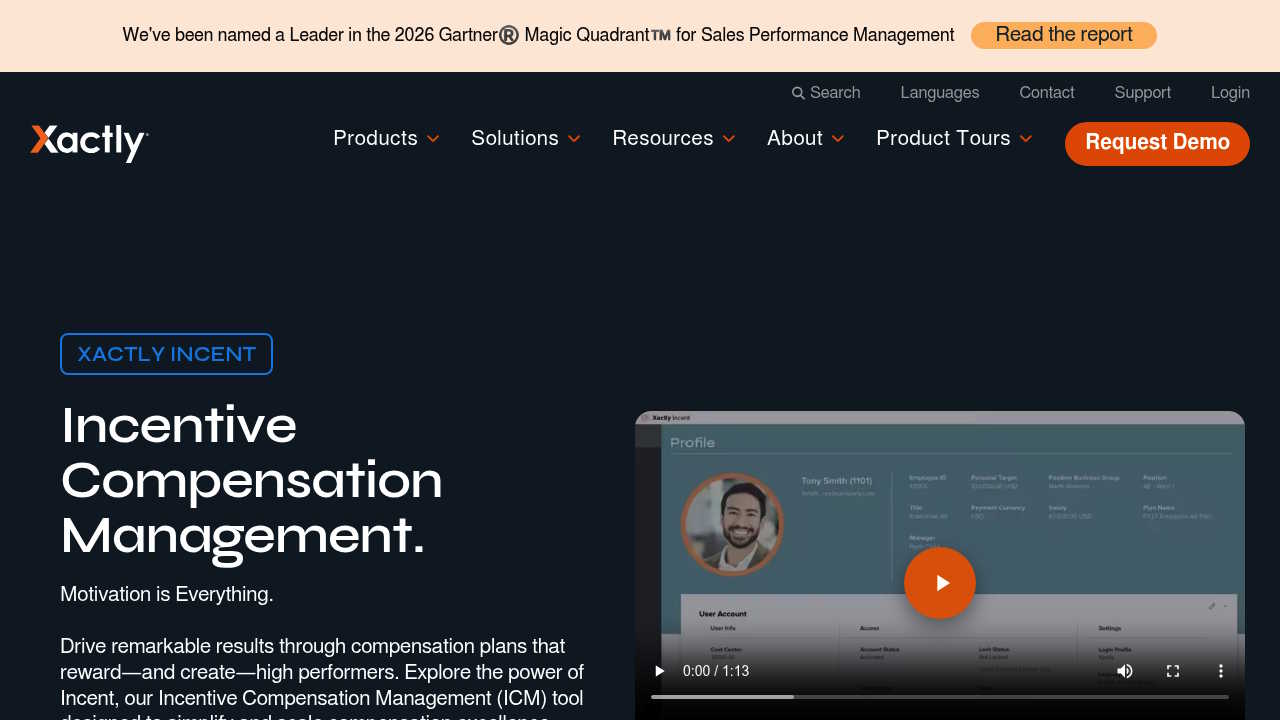
Xactly Incent is the benchmark for enterprise ICM. It positions itself with real-time commission transparency and lets reps see projected earnings by deal. AI analytics and strong compliance tooling make it a fit for large, regulated businesses. The trade-offs are real: longer implementation timelines, dependency on professional services for plan changes, and pricing that pushes most mid-market teams out of scope. If you’re considering moving away from Xactly, the Xactly alternatives guide outlines what to look for in a replacement.
Salesforce Spiff
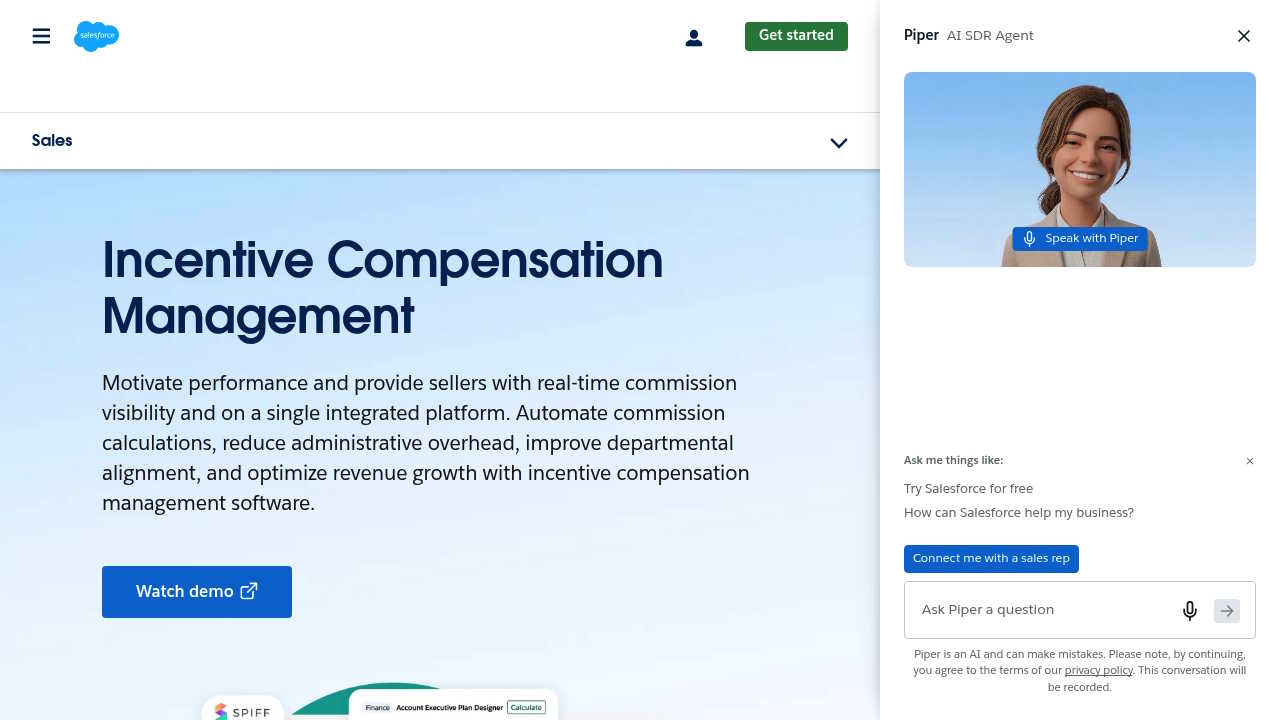
Salesforce markets Spiff as incentive compensation management that automates commission calculations and motivates sellers. G2 users reference it as well-integrated and easy to use within the Salesforce ecosystem. At approximately $75/user/month (Kelley Austin, Jan 2025), it’s approachable for Salesforce-native teams. Outside Salesforce, though, its value drops noticeably. Multi-CRM environments or teams pulling data from HubSpot, Stripe, or a data warehouse will feel the integration gaps quickly. The Spiff vs EasyComp comparison covers the key differences for teams running multi-system stacks.
Everstage
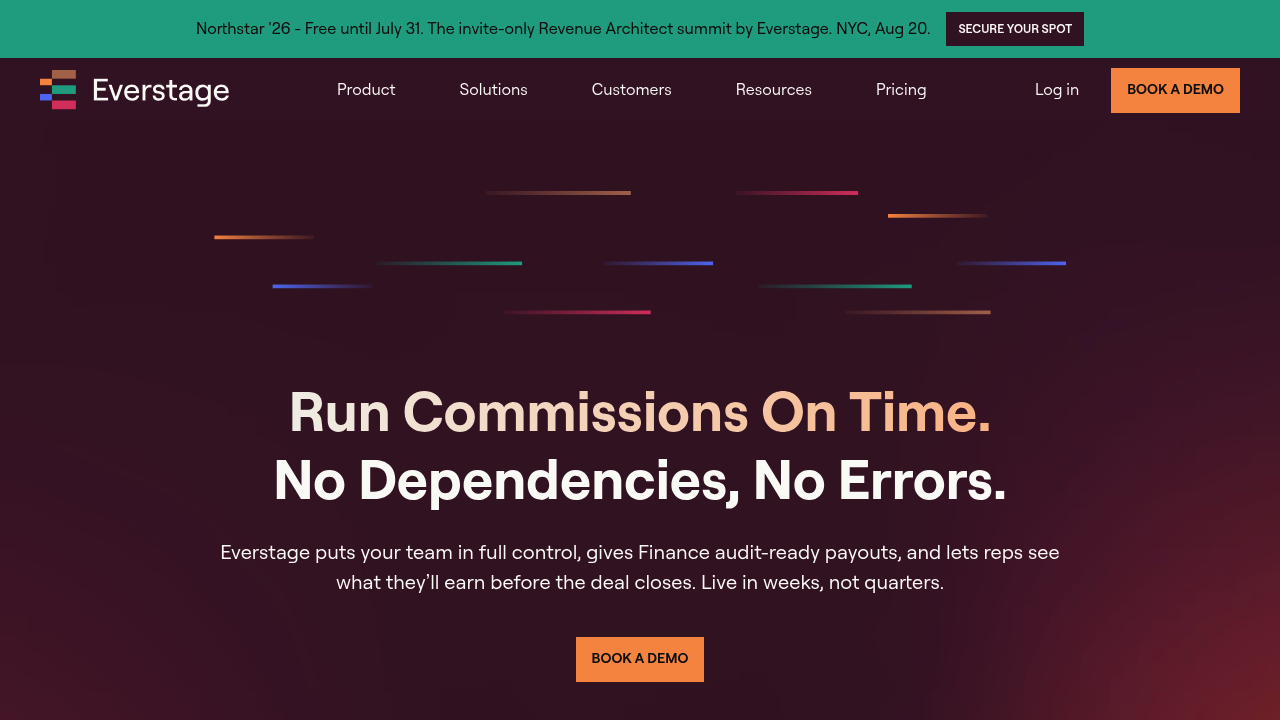
Everstage’s self-serve plan builder and persona-based design (RevOps, Finance, Sales each see what’s relevant to them) make it a popular mid-market choice. Plan simulation and dispute reduction are among the features it highlights most. The friction: pricing isn’t publicly available, which adds friction for buyers comparing across platforms, and the migration documentation publicly visible is lighter than some alternatives.
QuotaPath
QuotaPath’s AI-native positioning and CRM/ERP/payroll integration story are its clearest strengths. For smaller teams with relatively clean, standardized commission plans, it’s a strong option. Where teams commonly hit friction: heavily customized plans with multi-tier accelerators, splits, and territory-based exceptions start to strain the tool’s flexibility.
EasyComp
EasyComp sits at the intersection of plan complexity and operational speed. Its architecture handles splits, accelerators, multi-tier structures, ramps, holdouts, and plan exceptions without needing a professional services team for every change. Real-time dashboards give reps line-by-line visibility into exactly how their numbers were calculated, which cuts the “why did I get paid this?” questions that eat into comp managers’ days. Integration with Salesforce, HubSpot, Stripe, and NetSuite means data flows in cleanly rather than requiring manual exports. Clients like Alkira and Carrum Health have highlighted the platform’s ability to reduce errors and increase trust in payout accuracy.
For a full head-to-head review of EasyComp against the other leading platforms, see the EasyComp vs leading ICM platforms comparison.
SPIFFs vs Standard Commissions: Why Your Software Must Handle Both
A SPIFF (Sales Performance Incentive Fund) is a short-duration incentive tied to a specific product, campaign, or behavior. Unlike a standard commission plan that runs a full year with quota attainment logic, SPIFFs often run for a week, a quarter, or a product launch window.
The software challenge: SPIFFs have different eligibility logic, separate payout triggers, and accounting treatment that may differ from standard commission accruals. If your platform can’t separate SPIFF payouts in statements and reporting, your reps will be confused and your finance team will be manually reconciling the difference every cycle.
What to verify in a demo:
- Can SPIFFs be launched and versioned independently from the base commission plan?
- Do rep statements clearly identify SPIFF earnings separately from standard commission?
- How does the system handle eligibility changes mid-SPIFF?
- Can Finance pull SPIFF-specific payout reports without custom SQL?
For context on how EasyComp supports automated SPIFF launches alongside complex comp structures, the platform’s design keeps SPIFF logic connected to the same audit trail as standard commission, so nothing falls through the cracks at month-end.
Implementation Playbook: What to Do Before You Sign Anything
Most teams underestimate implementation scope. They focus on the calculation engine and forget the data.
Before you select a vendor:
- Map every commission component: roles, plans, territories, products, splits, holds, ramps, and draws
- Confirm which CRM fields drive commission credit (close date, contract value, product line, rep assignment)
- Identify how returns, refunds, and clawbacks are currently handled
During implementation:
- Backfill three to six months of historic deals and compare expected vs. calculated outputs before go-live
- Run parallel calculations for at least one pay cycle before fully switching off the old process
- Confirm the approval workflow is in place before the first payroll submission
Post go-live:
- Assign clear ownership for plan changes (who submits, who approves, what the SLA is)
- Document audit trail retention policy (finance and legal will ask)
- Set an inquiry response SLA for rep questions so disputes don’t sit unanswered for days
If you’re coming off spreadsheets, the guide to replacing commission spreadsheets walks through the migration steps in detail.
How to Evaluate Pricing and ROI Without Getting Surprised
Nearly every vendor in this category keeps pricing off their public pages. That opacity makes budget comparisons harder, but here’s what to request in every conversation:
- Per-payee pricing vs. per-seat (admin) pricing, and whether both apply
- Implementation or professional services fees (separate from subscription)
- Integration build costs if your CRM or ERP isn’t a native connector
- Annual vs. multi-year contract terms and what’s locked vs. flexible
For ROI modeling, the most useful inputs are: hours saved per pay cycle (calculations, dispute handling, reporting), error rate reduction (payroll corrections are expensive), and rep time reclaimed from shadow accounting. EasyComp’s sales compensation ROI calculator lets you run those numbers against your current setup before you talk to a vendor.
The single best question to ask in any vendor demo: “Show me a worked example using our actual commission logic, including a split deal with an accelerator.” Their answer tells you more than any slide deck.
FAQ: Best Commission Tracking Software 2026
What’s the best commission tracking software overall?
For most mid-market to enterprise teams managing complex plans, EasyComp and CaptivateIQ are consistently the strongest options. Xactly Incent is the enterprise standard but requires a larger investment and longer rollout. G2 (April 28, 2026) lists Everstage, CaptivateIQ, Salesforce Spiff, and Xactly Incent among the top-rated options.
Best for Salesforce-native teams?
Salesforce Spiff integrates tightly within the Salesforce ecosystem and is a natural fit for teams that live entirely in that platform.
Best for complex multi-tier plans?
EasyComp and CaptivateIQ both handle multi-tier, split, and accelerator-heavy plans well. EasyComp’s architecture is designed to make those changes fast and auditable without needing consultant support.
Best for implementation speed?
EasyComp is built for rapid rollout. Teams coming from spreadsheets or off a legacy ICM can typically get live faster compared to enterprise-tier platforms with heavier configuration cycles. See the top 5 fastest platforms to implement in 2026 for a ranked breakdown.
What are the most common buying mistakes?
- Choosing based on dashboards only: a beautiful rep-facing UI is worthless if the calculation engine can’t handle your plan logic
- Ignoring the audit trail: disputes will happen; if you can’t pull a line-by-line calculation history, you’ll be rebuilding it manually
- Under-scoping integrations: confirm every data source (CRM, billing, ERP, payroll) and ask vendors how each sync works, not just whether it’s listed as supported
What about ASC 606 commission expense reporting?
Ask vendors directly: which commission expense amortization models do they support, what’s the output format, and can Finance pull it without an IT ticket?
For a detailed look at how to reduce sales commission disputes, EasyComp’s guide covers the workflow and tooling choices that cut inquiry volume at the source.
Your Next Step
The right platform comes down to four variables: your CRM environment, the complexity of your commission plans, your time-to-value target, and your team’s tolerance for implementation effort.
If you’re managing splits, accelerators, ramps, and holdouts across multiple roles, and you need a platform that’s fast to implement, explainable to reps, and payroll-ready without manual cleanup every close cycle, EasyComp is worth a close look.
Start with a free comp operations cost analysis to see where your current setup is costing you, or book a consultation to walk through your specific commission logic with an EasyComp specialist.
Related Resources
- Best Commission Tracking Software in 2026: A CFO’s Guide – finance-first evaluation framework
- Best Commission Tracking Software in 2026: 8 Platforms Compared – wider vendor set including Varicent and Performio
- What Is the Best Commission Tracking Software? – focused four-vendor view
- Sales Compensation Plan Design Guide – design the plan before you pick the tool